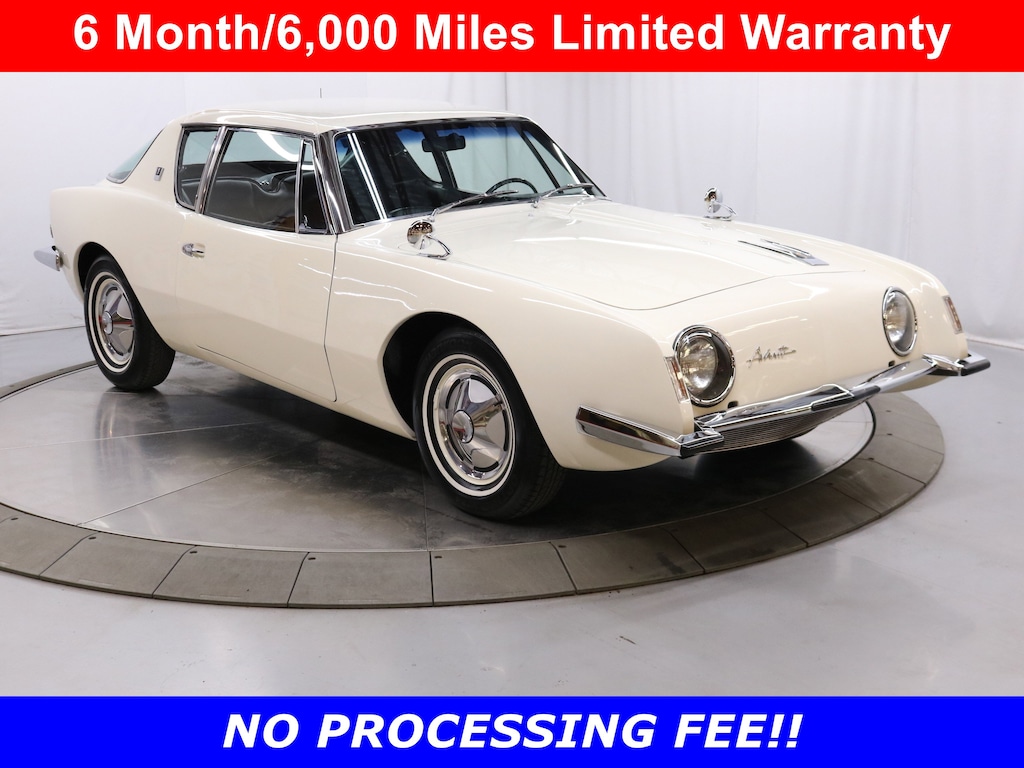
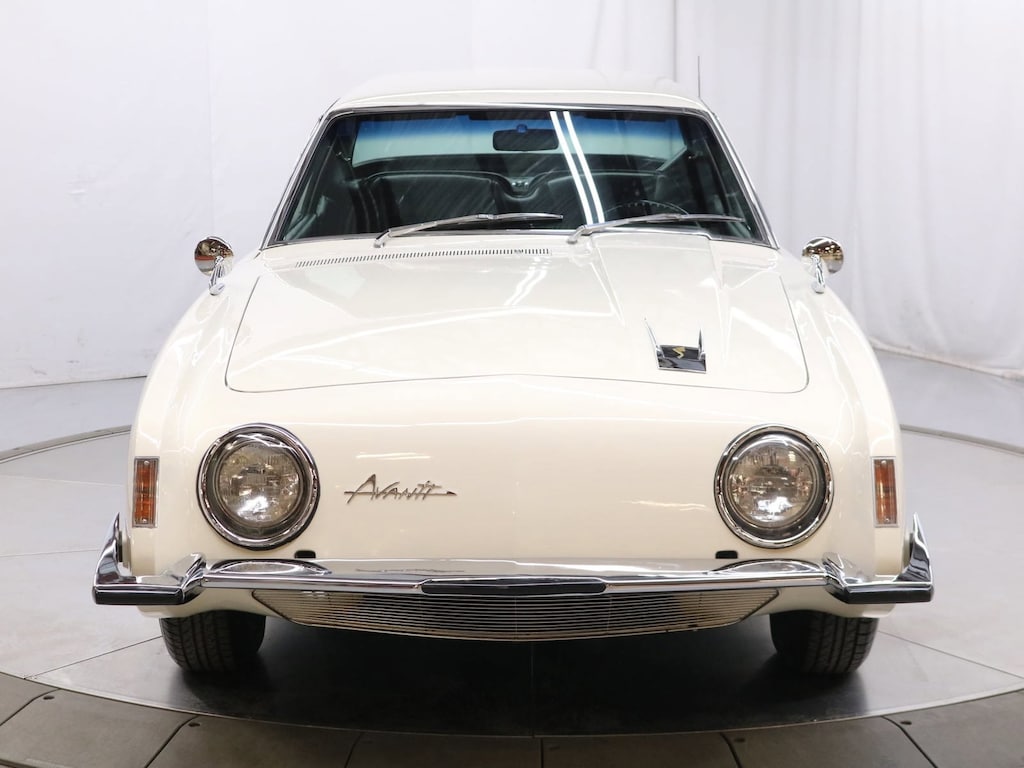
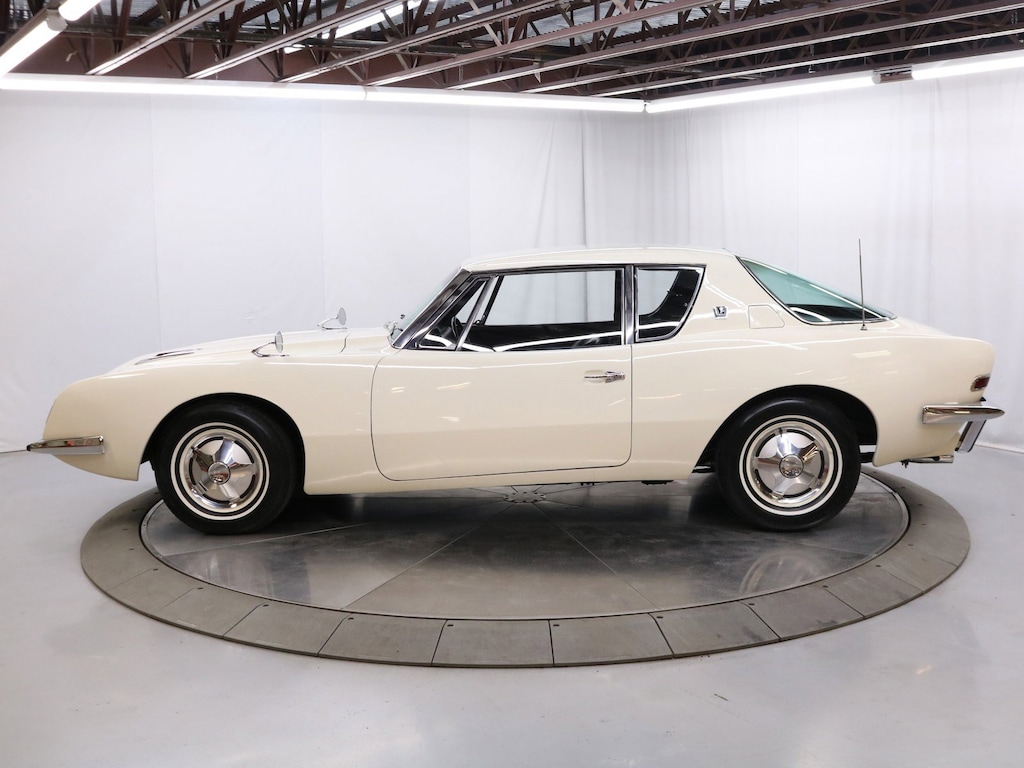
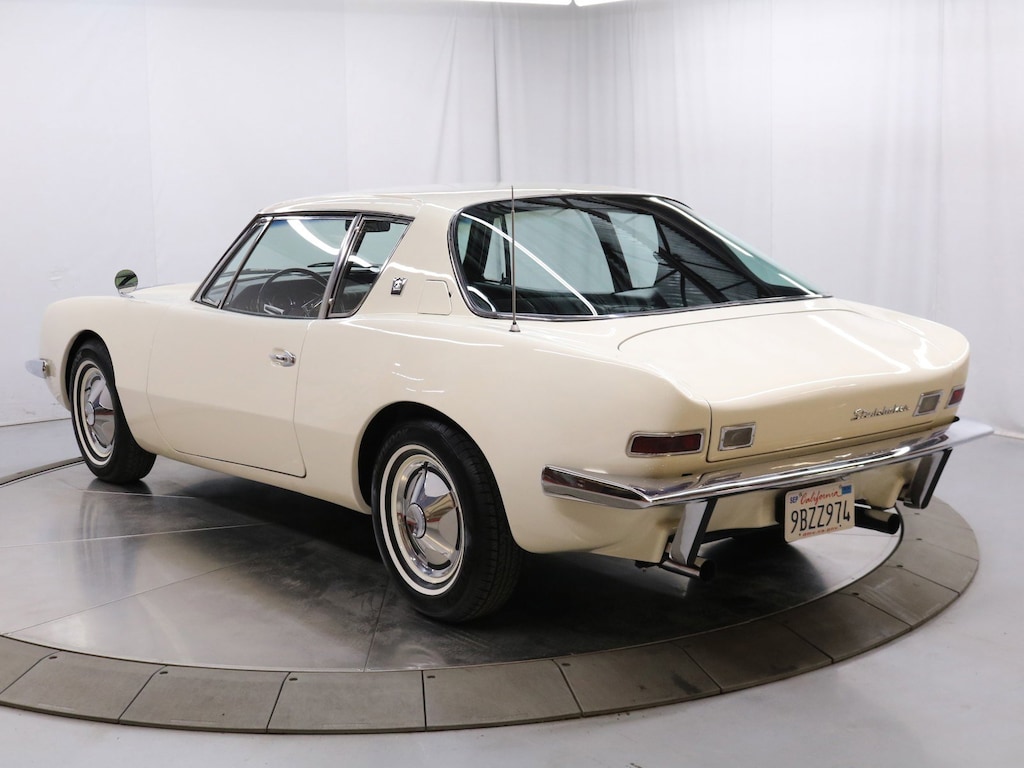

The 1963 Studebaker Avanti is a personal luxury coupe celebrated as an avant-garde masterpiece and one of the most significant milestones of the postwar American automotive industry. Conceived by Studebaker president Sherwood Egbert as a high-performance "halo car" to rival the Ford Thunderbird, it was designed in a legendary 40-day crash program by industrial designer Raymond Loewy and his team. Marketed as "America's only four-passenger high-performance personal car," the Avanti combined advanced safety, striking jet-age styling, and blistering record-breaking speed.
The Avanti was built on a modified Studebaker Lark Daytona convertible chassis but paired with cutting-edge powertrain options built for high-speed endurance:
- R1 (Naturally Aspirated): Powered by a 289-cubic-inch V8 engine delivering 240 horsepower. It used a Carter four-barrel carburetor and featured a 10.25:1 compression ratio.
- R2 (Supercharged): Equipped with a factory-installed Paxton centrifugal supercharger on the 289 V8, churning out 289 to 290 horsepower. The R2 is highly coveted by collectors, particularly when paired with the rare 4-speed manual transmission.
- R3 (High-Performance Supercharged): : A bored-out 305-cubic-inch version producing 335+ horsepower. Driven by racing legend Andy Granatelli at the Bonneville Salt Flats, modified R3 models smashed 29 world speed records, clocking speeds of nearly 179 mph.
Part of the Duncan Imports collection since 2024 this Avanti was originally purchased in California and is a rare 4 speed manual. It is represented as having 24,000 miles.
