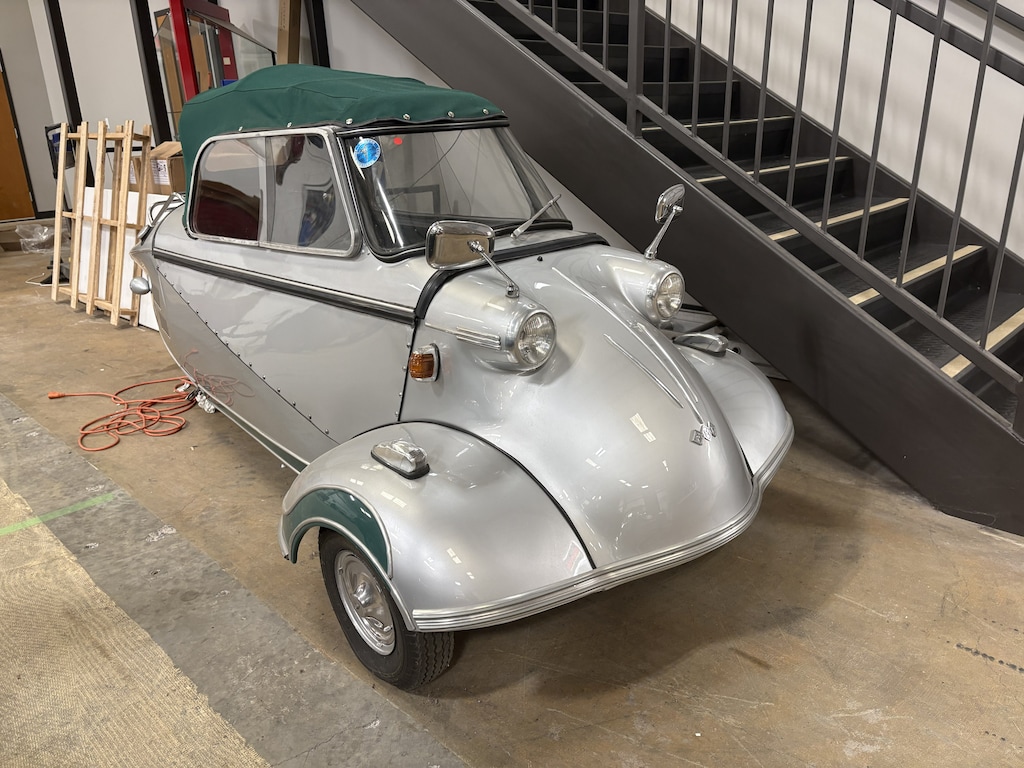
The Messerschmitt Kabinenroller (Cabin Scooter) was a series of iconic, aircraft-inspired three-wheeled microcars produced in Germany from 1953 to 1964. Banished from building aircraft after World War II, the famous aerospace manufacturer Messerschmitt pivoted to manufacturing these fuel-efficient "bubble cars," which were designed by engineer Fritz Fend to provide affordable, basic transportation for post-war Europe.
Because they were designed by an aeronautical engineer and built in an airplane factory, these microcars featured heavy aviation influences:
- Bubble Canopy: Instead of traditional doors, passengers entered by tilting a large, clear plexiglass canopy to the side, exactly like a fighter jet cockpit.
- Tandem Seating: To maximize aerodynamics, the driver and passenger sat inline (one behind the other) rather than side-by-side.
- Aircraft Yoke: Rather than a round steering wheel, drivers controlled the front wheels using a swiveling steering bar reminiscent of an airplane yoke.
Principal Models
- KR175 (1953-1955): The original production model, powered by a tiny 174cc single-cylinder, two-stroke engine.
- KR200 (1955-1964): The most successful and famous variant. It featured an upgraded 191cc Fichtel & Sachs engine producing around 10 horsepower, a revised suspension, and a top speed of roughly 50 mph (80 km/h).
- KR201 Roadster: A sporty open-top version featuring a canvas folding roof, a full windscreen, and no side windows.
- FMR Tg500 "Tiger" (1958-1961): A rare, high-performance four-wheeled sports variant sporting a 494cc twin-cylinder engine, designed to reach speeds close to 80 mph.
The Messerschmitt microcars were highly successful in their era, with tens of thousands of units sold to everyday drivers and celebrities alike---including Elvis Presley. While their popularity waned in the 1960s as affordable full-sized vehicles like the Volkswagen Beetle entered the market, they remain highly prized collector items today.
