
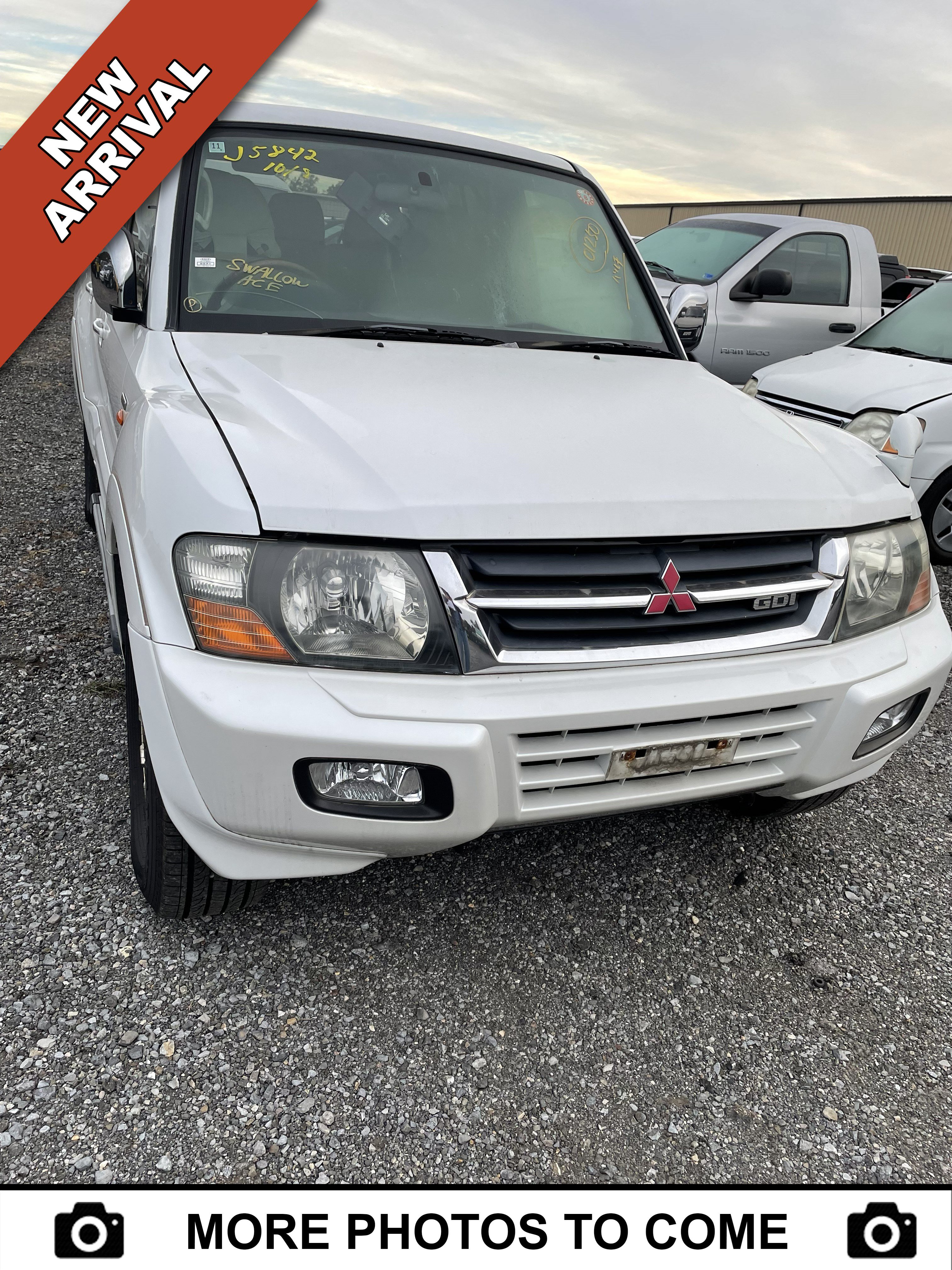
The 2000 Mitsubishi Pajero Exceed marked a major milestone for the model line, introducing the third-generation (NM) design. This generation famously transitioned the Pajero from a traditional body-on-frame setup to a rigid unibody (monocoque) chassis with a built-in ladder frame, dramatically improving on-road handling and safety while preserving its renowned off-road capabilities.
As one of the highest luxury trim tiers available, the Exceed combined rugged engineering with premium passenger comfort.
The 2000 Pajero Exceed was offered primarily in a Long Wheelbase (LWB) 5-door configuration with seating for up to seven passengers, though short wheelbase variants also existed in certain markets. The 2000 Pajer0 Exceed offer 2 different powerplants, this one is equipped with the 3.5L GDI V6 Petrol (6G74) delivering roughly 140 kW to 162kW (190-220 hp) and 303-348 Nm of torque. It is highly regarded for its smooth power delivery.
A hallmark feature of the 2000 Exceed is the SS$-II electronic four-wheel-drive system. Upgraded for this generation with a planetary center differential, it distributes torque in a 33:67 front-to-rear bias under normal driving conditions but can lock to a 50:50 split when traction demands it. Drivers can shift on-the-fly between:
- 2H (Rear-wheel drive for optimal highway fuel economy)
- 4H (Full-time all-wheel drive for wet or slick pavement)
- 4HLc (Four-wheel drive with a locked center differential for loose surfaces)
- 4LLc (Locked center differential with low-range gearing for technical off-roading)
The Exceed package focused heavily on interior refinement. Notable factory features included:
- Flexible Seating: A fold-and-tumble second row and a highly desirable third row that stores completely flat into the rear floor well to maximize cargo volume.
- Premium Cabin Amenities: Woodgrain trim accents, leather upholstery, heated front seats, dual-zone automatic climate control, and a panoramic power sunroof.
- Rugged Add-ons: Often equipped with side running boards, factory fog lamps, and a rear-mounted full-size spare tire carrier.
182,299 KM
